Which Behaviors Destroy Inner Drive?
To answer the first question, I will start with a somewhat absolute statement: “All teaching is harmful.” How do I explain this? Perhaps I can use the study of Buddhism as an example. Learning Buddhism is a lifelong pursuit. For many, after decades of study into their eighties, they may only have a sliver of realization. Indeed, with the Buddha’s teachings, countless scriptures, and commentaries by later teachers, learning “should” be easy. Yet, perhaps because there is so much material and instruction, true learning becomes difficult. I often ask myself: if these books didn’t exist, and I had to discover and think for myself, could I find the fundamental contradictions in my own logical system? How would I explore and resolve them? This kind of thinking allows one to exercise their awareness at a deeper level to learn better. When I read, I usually stop once I grasp a significant framework. I prefer to think through things within my own practice, filling in the framework with my own vital experiences to construct my own abstract knowledge model. Only after I have built my own model do I return to the books to see how others’ models differ.
Classes
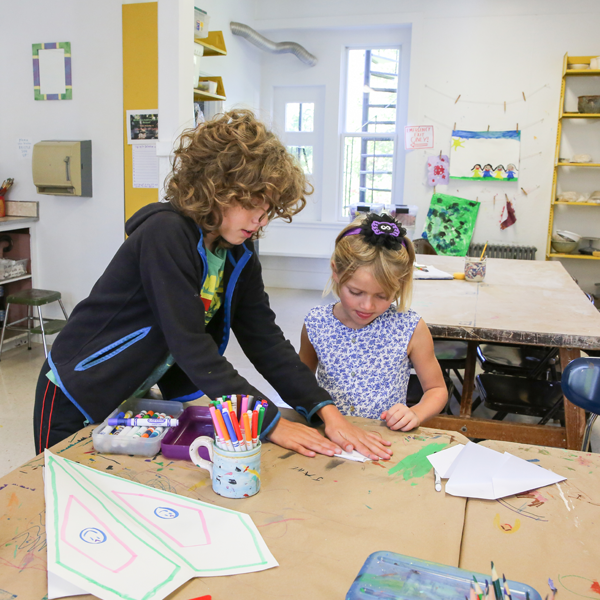
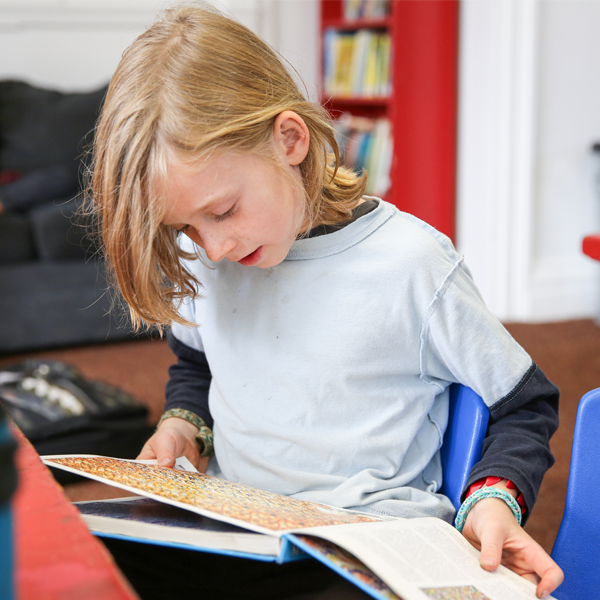
Sudbury has no curriculum. There are no grade-level subjects set by authorities, nor are there teacher-led “themed” courses. Only when a student feels they want to learn something and wants a knowledgeable adult to teach them can they “request a class.” The frequency and duration are determined by the student’s needs. Once the need is met, the class ends immediately; there is no rigid requirement to span a full semester. However, during my 2016 visit to Sudbury, I found that even these requested classes had nearly vanished. I asked a staff member (Sudbury has no “teachers”) about this. She noted that because of the internet, students now find resources themselves. They might talk to an adult when they have a specific question, but they no longer request formal “classes” as they did in the early years. “Bravo!” I thought. The Sudbury model naturally adjusted to the internet age. In other models, it might take years for authorities to recognize the shift and slowly adapt.
External Assessment
Assessment is a theme frequently encountered in education. So, what kind of damage does external assessment do to a child’s inner drive? The examinations in conventional schools are, naturally, a very rigid form of external assessment. However, even the so-called “diverse assessments” found in various innovative educational models are something Sudbury strives to avoid. Sudbury believes that everyone is capable of self-assessment, and it is self-assessment that truly matters. The founders of Sudbury go to great lengths to prevent any adult assessment from exerting an external influence on a child’s learning. Sudbury’s extreme persistence in this regard was so absolute that for many years, the school had no graduation ceremonies or graduation defenses. It was only at the request of many students—who felt the need for the sense of ritual marking their transition into adulthood—that Sudbury finally introduced the graduation defense. Students who feel they are ready to graduate submit an application and must then present at their defense why they believe they are ready to face adult society independently and responsibly, while accepting questions or challenges from the community.
The Problem of “Integrating into Society”
Of course, at this point, many will ask: how do students from a model like Sudbury integrate into external society after graduation? Facing this question, many innovative educational models feel they should implement assessment systems within the school that mimic society to help students adapt to the outside world. This question is somewhat beyond the scope of this article. However, because so many people ask it—leading them to doubt self-directed education or the Sudbury model—I will briefly share my thoughts here. In our society, regardless of the country, externalassessment is omnipresent. It’s not just in schools; even at home, parents or surrounding adults constantly assess children. One could say that assessment is everywhere in society; even Sudbury children will undoubtedly encounter a vast amount of others’
assessments once they step outside the school. But finding a place that is completely inclusive, free of external assessment, and relies entirely on one’s own internal
assessment is exceedingly difficult. If a person first establishes a fundamental experience of life and builds confidence in life itself before facing the various imperfections or even “perversions” of society, it will be much easier for them to recognize and adapt. Conversely, if one’s perception and understanding of life are distorted from the beginning, it becomes extremely difficult to rediscover the self and life itself within a complex society.

How Do We Truly Protect Inner Drive?
Sudbury is “radical” because it doesn’t just ask adults to restrain themselves; it builds a system that makes it impossible for adults to interfere with a child’s learning.The School Meeting
The highest authority at Sudbury is the School Meeting, which is composed of all staff members and students. Important school matters—including financial budgets and the hiring and firing of personnel—are discussed and decided within the School Meeting. In the early days, Sudbury had another body called the Assembly, which included all parents. According to my conversation with Mimsy, one of the school’s founders, the Assembly’s primary responsibility was to review the budgets passed by the School Meeting. Under Sudbury’s bylaws, the Assembly had the power to veto the budget. However, in practice, because the Assembly felt that the members of the School Meeting had a much deeper understanding of the school’s actual situation, they never exercised this power. Eventually, Sudbury abolished the Assembly altogether. In the Sudbury School Meeting, adults and minors each have one vote per person. (Of course, one must be present to vote; younger children who find certain topics like budgets uninteresting may not attend, but older children are often highly engaged in many of the issues.) The school’s principal, Daniel Greenberg, along with the other founders, had to undergo an annual review and vote by the School Meeting; anyone receiving less than half the votes would be dismissed.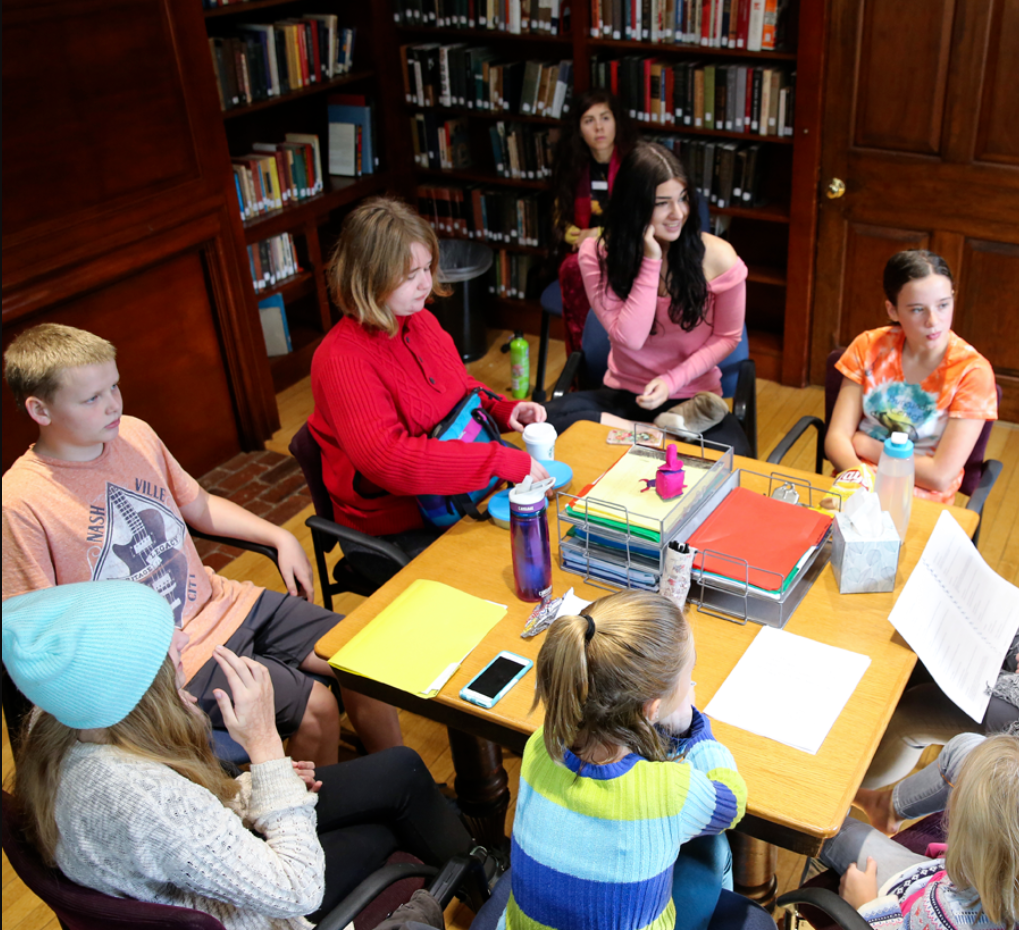
The Judicial System
The Judicial Committee is another system that guarantees the rights of students. In the beginning, Sudbury did not have a Judicial Committee; all matters were discussed at the School Meeting, which was extremely time-consuming. Consequently, discussions regarding violations (breaches of the rules in the School Manual) were moved to the Judicial Committee. While the School Meeting takes place once a week, the Judicial Committee meets every day for one hour.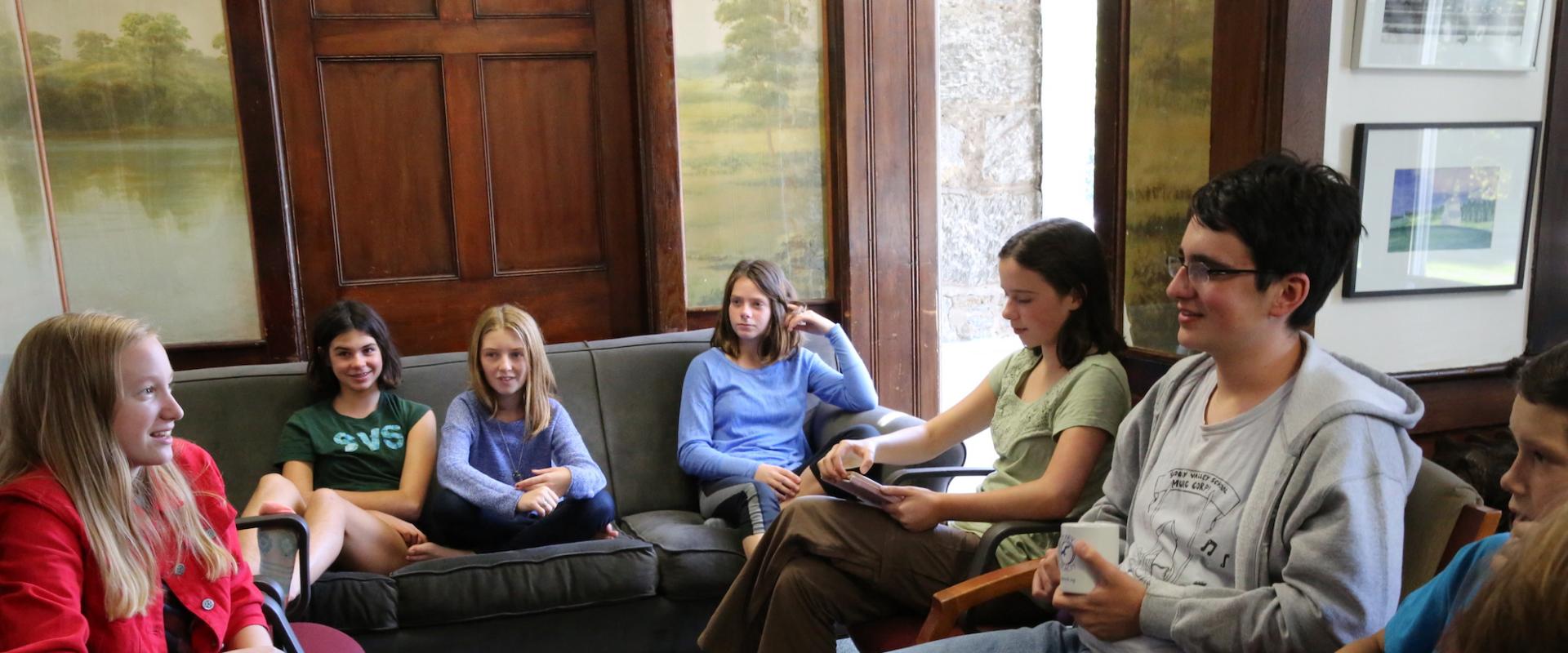
The School Manual
The Chinese tradition often views such institutional structures with skepticism, assuming there are a thousand ways to manipulate them. However, their School Manual already has written measures to counter every one of those thousand ways. Therefore, the School Manual is absolutely central. The School Manual translates the community’s philosophies, principles, rules, and regulations into written form, making them easily accessible. It also establishes processes that allow all community members to participate equally in its creation and revision. Sudbury’s School Manual, which exceeds 800 pages, contains many rules and details that have been iteratively shaped over decades by the entire membership, including students, through actual practice. According to what Mimsy told me, the core keys are openness, transparency, and a clear definition of where power lies. For example, the Sudbury School Manual clearly stipulates that the School Meeting is the highest authority; beyond this, there is no other power structure composed solely of staff. Many innovative educational organizations in China operate as private companies rather than non-profit organizations. However, even as a private company, one can still choose to make finances public and establish the School Meeting as the highest authority—it is simply a choice. A School Manual is also essential. Yet, many innovative education organizations in China don’t even have a manual; a principal might impulsively invent rules on the spot. This is even more extreme, yet it is commonplace among domestic educational organizations. Without these structures, how can one guarantee that a child’s right to self-directed learning is protected? How can one guarantee their inner drive? This is the core of the Sudbury model. Only Sudbury truly guarantees these things. Moreover, this itself is a test for the founders: do they truly have the confidence to let children master their own learning? Lacking such confidence, a founder will still want adults to control the child’s learning. They might first grant the child only those learning rights they feel comfortable giving away, while clutching the rest—and may even retract those rights whenever they feel it is “necessary.” In contrast, the founders of Sudbury, from the very beginning, completely trusted children and handed over all learning rights to them, rights that no one can strip away. In my conversations with the Sudbury founders, they emphasized this part heavily, viewing it as an indispensable core of the model. To my knowledge, in the many Sudbury-model schools across the United States, without exception, the School Meeting serves as the highest authority, with adults and minors each having an equal, one-person-one-vote power. Aside from being unable to hold certain administrative roles in the School Meeting due to their minor status, the rights of minors are identical to those of adults.
An Independent Growth Environment
Recently, while reading several books on childhood education, I have come to a conclusion: the primary contradiction in education lies in the fact that children are not yet self-reliant or independent (for example, they may not know how to cook, or even how to dress themselves or use the restroom). Yet, developing an independent personality and the ability to take responsibility for one’s own actions is, in itself, one of the most important educational goals. The younger the child, the more numerous and complex these issues tend to be. A major theme in childhood education is how adults create scenarios or environments for independence (often, this doesn’t need to be an entire environment, but simply specific scenarios, especially for very young children). Skilled parents do this well, but most parents in the world are not naturally skilled; most do not know what psychological preparation they need before becoming parents—such as understanding that children are inherently active and even noisy. In this sense, the Sudbury model provides children and teenagers (from ages 4 to 18 or 19) with such a completely self-directed and independent growth environment. For minors over the age of 13, Sudbury actively encourages them to step out of the school and into society for internships. Sudbury staff also do their best to help students find social practice or apprenticeship opportunities. When I visited Sudbury in the United States, I rarely saw older children on campus; I later learned that the older students were generally off-campus. I saw a list on the school wall where all off-campus students were registered with their contact information.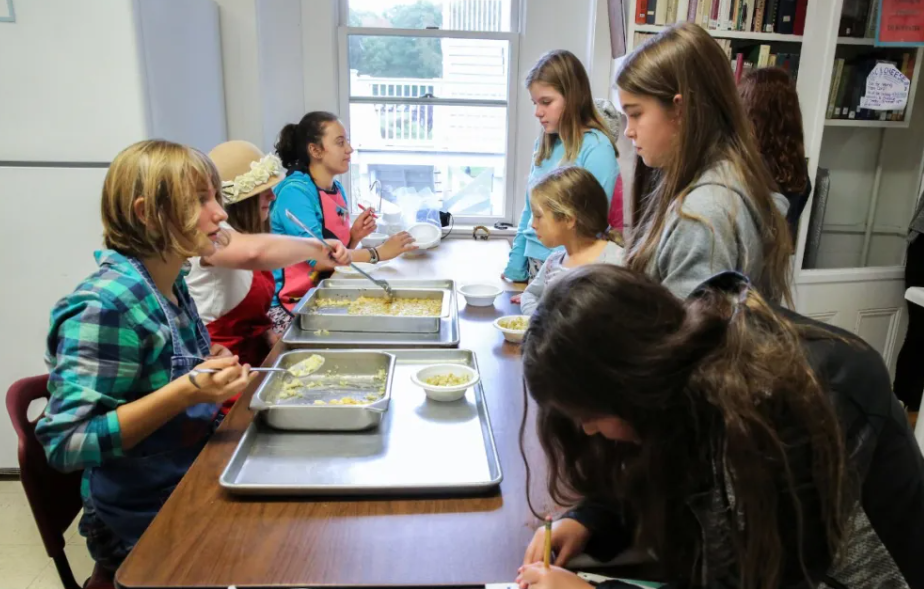
The Educational Significance of Equal Participation in Community Building
Returning to the broader scope of self-directed education: this field includes formal settings, such as full-time or part-time schools, as well as informal settings, including companies, families, and other spaces outside of formal education. In a full-time environment like Sudbury, self-directed education inevitably requires that students participate equally in the building of that community—including the creation of rules and regulations, the handling of violations, the auditing of financial budgets, and the hiring and firing of personnel. As I mentioned earlier, perception and creation are inherent capacities of life; the fundamental goal of education is to protect and exercise these capacities. If students spend a vast amount of their time in an environment where they cannot participate as equals in its construction, their inherent powers of perception and creation are negated and suppressed by that very environment. Every individual, every life, naturally perceives its surroundings and seeks to creatively improve them. Such environments typically include families, schools, and companies—all of which are “full-time” settings. For these places to become healthy educational environments, they must allow individuals to improve the environment through their own perception, enhancing their own abilities through constant feedback and iteration. Therefore, from the perspective of self-directed education, these mechanisms and guarantees of equal participation found in Sudbury are indispensable for any full-time educational environment. Here, I must take another tangent. Some people may only understand the importance of perception and creation at a superficial level. For instance, many modern innovative educational models place heavy emphasis on “life skills” or “emotional intelligence,” often prioritizing “competencies” while neglecting “knowledge.” There are so-called “21st-century education frameworks” that claim the mastery of problem-solving, aesthetics, creativity, and independent thinking is what matters, while knowledge itself is unimportant. In my view, this perspective exists only because we are still in a phase of “breaking down” the old system; consequently, people blindly reject anything seen as part of the “old education,” such as knowledge. However, if we can truly deconstruct the flawed traditional concept of knowledge and see its essence—which is simply an abstract model built upon significant experiences—we would realize that everyone is creating their own knowledge (abstract models) based on their own perceptions (significant experiences). Thus, the pursuit of knowledge does not conflict with the cultivation of the aforementioned abilities; rather, they complement each other. Knowledge is a complex, organic living entity. Through years of self-directed learning across many different fields, I have experienced the immense richness of learning methods. In trying to summarize these diverse methods, I found they can only be understood through the lens of a living system. Generally speaking, learning is like navigating a complex living system: interest is the primary drive, the courage to explore is vital, and the perception of oneself, the environment, and its resources is essential. I won’t go into detail here, but those interested can read my article, “Knowledge is an Organic Living Entity.“ Therefore, knowledge acquisition—just like the development of problem-solving, aesthetics, creativity, and independent thinking—depends most importantly on the individual’s capacity for perception and creation. From this, you can see why I emphasize so strongly the importance of perceiving, creating, and peacefully constructing a community as equals. This is the root of learning.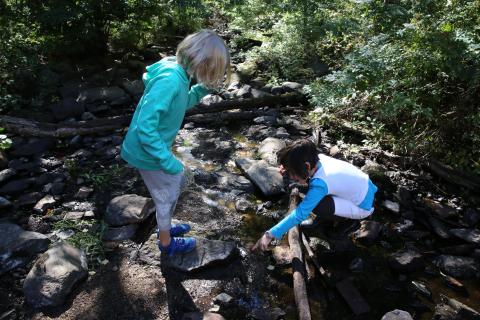
The Significance of the Sudbury Model
I have always believed that Sudbury is a truly great experiment. Its founders launched it in 1968 with immense wisdom and a profound public spirit. For nearly twenty years—from its founding until the late 1980s—the vast majority of Sudbury staff worked as volunteers. It is important to distinguish the term “volunteer” here: in the Western context, it strictly means working without pay. If you receive a salary, you are an employee or a part-time worker.
- Children and minors, like adults, are fully capable of self-directing their own learning and taking responsibility for it.
- Children and minors, like adults, are fully capable of participating in the equal and peaceful construction of a community.
Is it Suitable for China?
Some may argue that a model like Sudbury is too idealistic and unsuitable for China. It is ironic how many people who consistently criticize the “special national conditions” argument in other contexts will unconsciously use those very same excuses when it suits them. This excuse is indeed convenient; many people likely use it subconsciously without a second thought. But is it truly unsuitable, or have we simply not made a serious attempt to implement it? Articles on the official Sudbury website record that even in the United States, students are initially unaccustomed to the School Meeting and the Judicial Committee. They often find it hard to believe that adults will truly return the right to learn to the children. Whether they believe it or not, the School Meeting and Judicial Committee are there. Students inevitably get the chance to interact with them—perhaps by observing, or perhaps when they encounter an issue they truly care about or need to defend their own interests. Suddenly, the significance of the meeting and the committee becomes apparent, and they begin to realize their importance. In Hong Kong, children at a Sudbury-model school—even when facing trial and potential punishment by the Judicial Committee—stood up and voted to support the continued operation of the committee when another student impulsively moved to abolish it. Yes, Sudbury schools in Hong Kong and Taiwan, which share the same cultural roots as the mainland, are able to successfully execute the philosophy of the Sudbury model. So, how exactly would the Sudbury model be “unfit” for China’s environment? It is true that younger children, in particular, may find it difficult at first to grasp the significance of the School Meeting and the Judicial Committee; they might feel that participating takes away from their playtime. (It should be noted that attendance at the School Meeting is only required if one is interested in the agenda. As for the Judicial Committee, one only needs to appear if they are charged with violating a rule; otherwise, they are under no obligation to participate.) Some founders of SDE schools believe that by abolishing the meeting and the committee, they are “respecting the child’s needs.” First, I believe this is a superficial understanding of learning needs. Identifying a true need is not that simple. Second, the School Meeting and the Judicial Committee are institutional systems that protect the self-directed rights of students. Without them, there is no way to protect a student’s other learning needs. Therefore, their nature is entirely different from a mere “interest.” Furthermore, even if students do not perceive the need for them immediately, adults can still use the School Meeting and Judicial Committee to manage the school. This ensures that these institutions remain in place, giving students the ongoing opportunity to experience and realize their importance.
As this article draws to a close, I want to add one final point. While I am introducing self-directed education and the Sudbury model, I am not a “fundamentalist” who believes this is the only way or the only “good” model. Even though I say that “teaching” can be harmful, I still “teach”. However, my method of teaching is to strive, as much as possible, not to destroy the students’ inherent agency—their capacity to perceive and create—but rather to give those powers full play. I am also aware that the “PlayGround” I prepare for my students is only a customized environment. Therefore, from time to time, I “release” my students back into the vast world. Instead of only engaging with the high-quality resources I have curated, they must go out into the expansive world of the internet to experience for themselves how to evaluate resources of varying quality. This returns the most fundamental power of perception and exploration to the student. Furthermore, when a student is uninterested in a topic, I don’t simply say, “If you don’t want to learn it, then don’t.” Instead, I work on building the “PlayGround”, for example, I tell stories. Interest requires a process of contact and feeling; how can one be interested in something they have never encountered? Yet, from start to finish, there is a profound respect for life and an insistence on equality. Children naturally love to play with and explore all sorts of things. If something exists in their environment, they will eventually try it. And “play,” in its essence, is the most equal way of being.