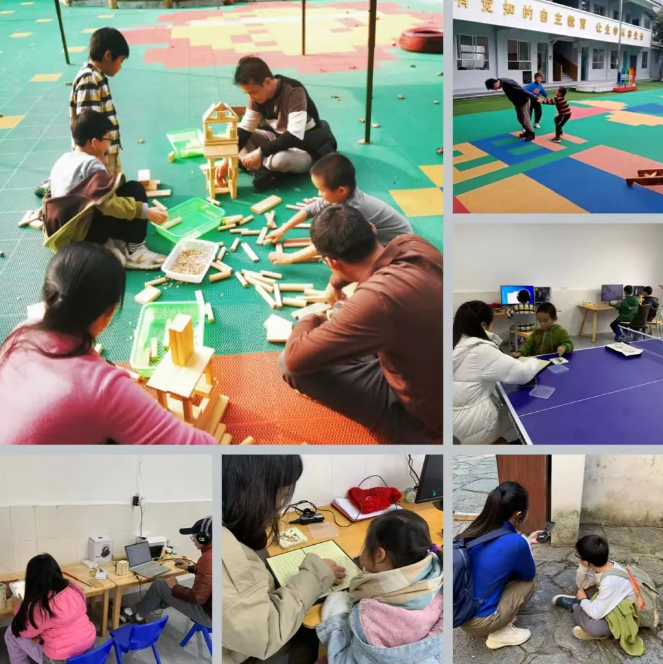
Original Chinese VersionEditor’s Note: The two-week Second Self-Directed
Education Experience Camp concluded successfully on January 21, 2024, at the
Yangshuo Tianfu Yuegu Learning Community. This article is an experience report
by resident advisor Leon, intended to help learners, parents, and educational
innovators better understand the essence of Self-Directed Education (SDE).
Summary: As self-directed educators, we believe that everyone—adults included—must continually pursue progress and growth. But how do we grow while sustaining a deep love for the world and a tight connection to its truths? Only through Self-Direction—and only through the Self-Directed Learning and Free Play built upon a richness of life experiences—can we achieve such vital growth.
Recently, many people have been asking about Progressive Education. I believe Peter Gray’s article, The Difference Between Self-Directed Education and Progressive Education, which I translated, has already clarified that topic. In this piece, I don’t intend to debate the merits of Progressive Education itself. Instead, I want to share my personal understanding of the word “progress” and explore the vital relationship between “progressing” and “being self-directed.”
01 / The Meaning of “Progress”
I have always believed that every individual should continually grow. To me, this is what distinguishes humans from plants and animals. Like them, we enjoy the sunshine, the rain, and all the splendor of nature; yet, as human beings, we possess the unique capacity to grow incessantly through the act of learning.
Why must we grow continuously? Perhaps I could say: it is to play better. Or, perhaps, it is to love more deeply. For those moments of sublime beauty we have touched, and for the moments that moved us to tears; for the love of this world and for those who stand beside us—it is for all of these that we must grow.
Unlike many parents who are prone to judging their children, I have always believed that all children share the same essence; they simply begin their journeys from different points. Life is incredibly diverse and multifaceted. A person might be naturally drawn to one specific facet of existence, and so their life begins by flourishing in that direction. There is nothing wrong with this—it is how we all begin. But true maturity, the act of transcending oneself, requires us to seek experiences and growth not just along that familiar path, but in the opposite direction as well.These experiences—of moving both forward and in the opposite direction—bring great self-identity and joy, but they also bring intense self-doubt and pain. These are the inevitable passages on the journey toward becoming a whole person; they are the essential lessons every human must complete in their own life’s growth.
These varied directions hold different levels of significance for a life. Among them, the largest is the understanding of the self, or the understanding of life itself. This is the largest life center. encompassing all other life centers within it (Regarding Life Center, please read this article . You can start by searching the term “life center”, and proceed from there). Much like the various life centers it contains, the understanding of self and life requires a richness of experience in both opposing directions. Only through this can we achieve the integration and fusion of these dualities, ultimately forming a complete life center.
This is a task that belongs to everyone. Each person has
their own unique problems to solve, but ultimately, all these paths lead back
to this largest task of all.
Everyone needs to continually “progress.” As we
understand the world and ourselves, we form many life centers; this is the very
process of life growing up. In this sense, I embrace the concept of
“progress.”
But if I were to say that everyone should take the task I
have defined above as their own goal for learning and growth, then I would
become a progressive educator.
Fortunately, I am not a progressive educator; I am a
self-directed educator. As a self-directed educator, I simply help each
individual life do what they truly want to do, without any trace of my own ego.
Of course, to be able to help every life develop and do what
it wishes to do, a self-directed educator must be sufficiently diverse and
possess multifaceted life experiences. Almost all problems in education stem
from an educator’s lack of understanding regarding the richness of life. An
educator must fully comprehend this richness while also striving to manifest
it. This is the true meaning of growth, or “progress,” for an
educator—and especially for a self-directed educator.
Even more importantly, you must transform yourself into the
“field”—the PlayGround—and manifest life in its truest form.
This includes manifesting the diversity of life and a state of open, lifelong
learning, where authority does not exist and every learner stands on equal
footing. When you manifest this, life will naturally sense it. As an educator,
when your own life is in full bloom, “authority” ceases to be a
concept that binds you. Whether you pick up or lay down the notion of authority
depends entirely on your own free playing, or your love for the world.
Life blossoms in stillness
The Zen masters of history might be the ultimate archetypes
of the self-directed educator. Even if they did not reach the level of the
“ideal teacher” described in Rousseau’s Émile, they are
certainly the closest humanity has ever come. Yet, these masters never employed
the methods of Rousseau’s ideal teacher. Most of the time, they simply
manifested—they manifested the true state of life. They maintained a constant
love for the lives around them, and at the right moment, with the right timing,
they would “cut through the flow” to aid someone. But such
“active” interventions were, in essence, no different from the
natural manifestation of life itself. These masters even claimed consistently
that they taught nothing—that the students learned everything themselves, that
everyone already possesses everything within them, and that every person is
inherently whole. This is what moved me so deeply when I read Cai Zhizhong’s
manga, The Platform Sutra and Zen Speaks, as a child.
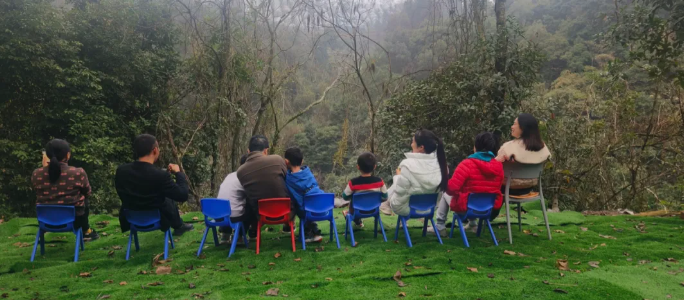
In a self-directed education community, the presence of
adults with deep and multifaceted life experiences is essential. This adult
diversity acts as a vital nutrient for the growth of a living soul. To support
this, adults must strive to embody and share the full breadth of their
experiences, providing a rich landscape for learners to explore. Below, we
examine why this richness is of such profound significance for a child’s
development.
Just as individuals strive for progress, a team must do the
same. In the future, every organization will inevitably become a learning
organization. A team’s primary competitive advantage will stem from its
members’ ability to resolve their own “life tasks” within the context
of the organization’s mission and environment.
In the realm of self-directed education (SDE), learning and growth are never reserved solely for the students. A self-directed community is a living ecosystem where adults and minors grow alongside one another. It is a shared journey toward wholeness.
Growing together
02 / How to Progress?
Life as it first emerges
In a self-directed environment—defined by equality,
inclusion, and diversity—educators are privileged to witness the primordial
beauty of life in its original state, a state yet to be “polluted” by
fragmented knowledge.
We come to realize that children are already whole beings. Their capacity for sensing, and even their depth of thought, often far exceeds that of most adults. To witness their innate kindness, their profound empathy, and their unyielding courage in the face of life’s challenges—coupled with their boundless ability to explore and create—is to see the ultimate truth of the world.
This is precisely what was experienced during the 2nd
Self-Directed Education Experience Camp in Yangshuo. I believe that when an
educator says they truly “love children,” it is because they have
been moved by this magnificent state of being that children manifest so
naturally.
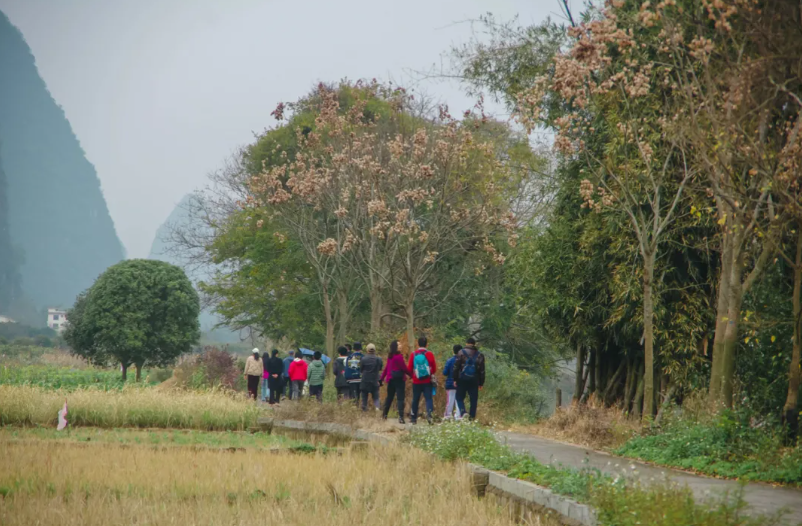
The second session of the camp lasted two weeks. During the
second week, a new group of children joined, including a boy named Xiao Song.
By then, the original group had already formed deep bonds. Xiao Song, feeling a
strong desire to belong, joined the community just as we were heading to Guilin
for a “City Exploration” adventure.
In an effort to integrate quickly, Xiao Song
“forced” his way into a conversation about anime—a topic the other
children were passionate about, but one he knew little about. His interjections
felt intrusive and disrespectful to the others’ shared interest. This tension
escalated from a verbal exchange into a minor physical confrontation.
Throughout the journey, the children were locked in a heated
debate over who was right and who was wrong. On the bus ride back to the
community, the two children who had been struck by Xiao Song sat together,
continuing to dissect and discuss every perceived wrong in his actions.
After a while, Liu Wei, a staff member, called me to the
back of the bus. She whispered that YY, who was sitting next to her, was
becoming emotionally unsettled by the children’s heated discussion. Everyone in
the community is aware of YY’s situation: in the presence of intense conflict,
YY easily becomes overwhelmed and agitated. My personal intuition was that this
was a manifestation of sensitivity and discomfort toward even the slightest
hint of violence or aggression.
So, I spoke softly to the children in front of me. Though
they were only nine or ten years old, they stopped their debating instantly.
They even leaned forward to tell the children ahead of them to be mindful of
YY, urging everyone to end the discussion.
When we returned to the community and stepped off the bus,
something remarkable happened. Xiao Song—who had been the target of the other
children’s intense criticism for the entire journey—initiated a gesture of
peace. He walked up to the two children he had struck and put his arms around
their shoulders, offering a wordless yet profound apology.
Reflecting on “The Incident”
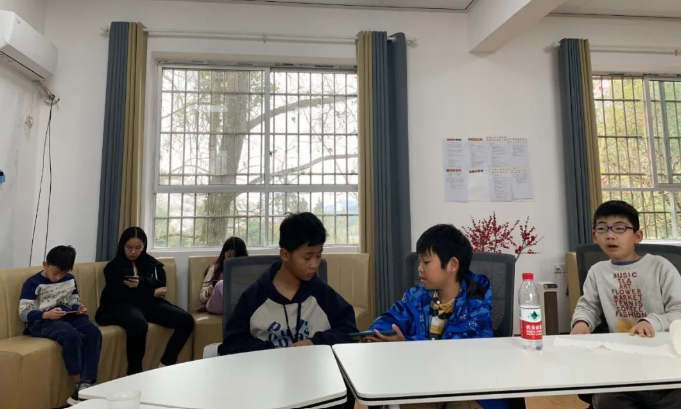
The following morning, during the JC Meeting, the children
involved gathered to reconstruct and reflect upon the events. As I sat directly
across from them, I was overwhelmed by their profound capacity for sensing and
their incisive analytical skills. They didn’t just recount what happened; they
navigated the complex geography of intention, impact, and reconciliation with a
clarity that many adults struggle to achieve.
With tears welling in my eyes, I was struck by a singular,
humbling thought: In the world of self-directed education, the boundary between
the educator and the educated often dissolves entirely. We are not
“teaching” them to be human; they are reminding us of what being
human actually looks like. Looking at these young lives in their original,
unpolluted state, I had to ask myself: What right do we, as adults, have to
“educate” them?
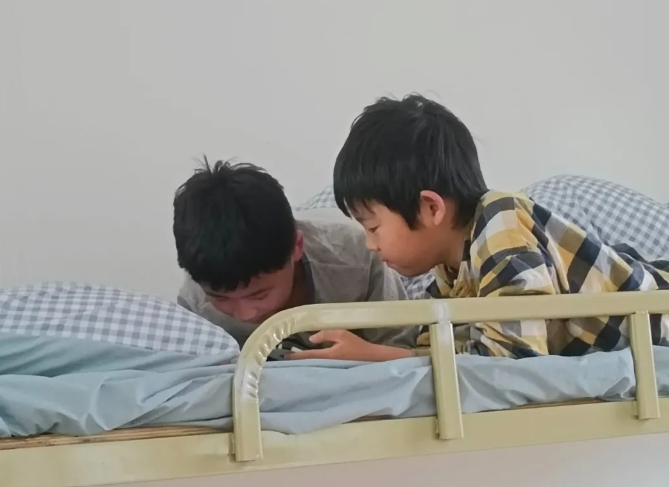
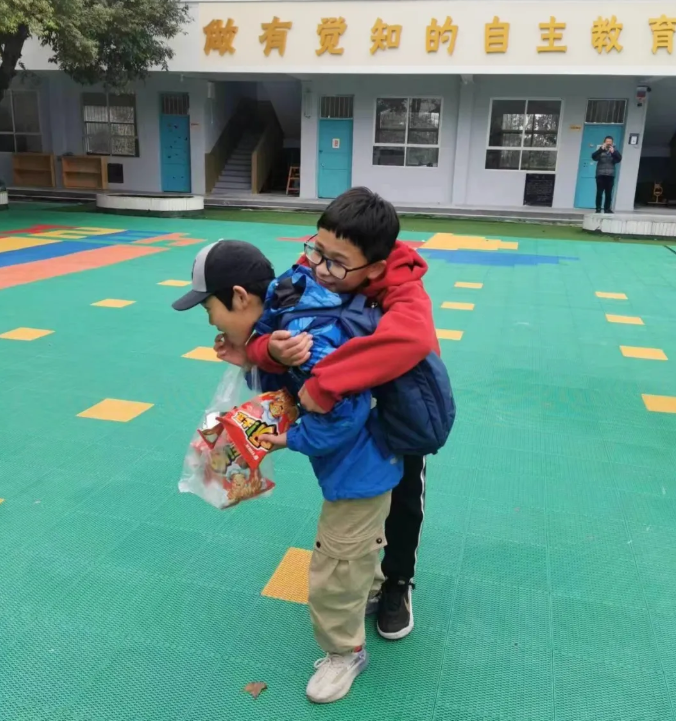
After this incident, these few children have become
inseparable besties.
Xiao Song and DD are playing video games together on a dorm bed. Xiao Song and DD embracing on the playground at the moment of parting
There are a few more details to share about YY. At fifteen,
she was the oldest student in the Experience Camp. She has a deep passion for
creating her own RPG games, but her parents, troubled by what they perceive as
“dark” narratives in her scripts, have frequently pressured her to
give up her creative work. When she first arrived at the camp, she carried a
detached, icy demeanor—so much so that some community members were initially
intimidated by her cold gaze.
On the day of our Guilin field trip, during the lunch hour
dedicated to exploring local delicacies, four of the younger children insisted
on skipping the traditional Guilin rice noodles to go to McDonald’s instead. YY
didn’t actually want McDonald’s, but seeing that I might struggle to supervise
four energetic children alone in a crowded city, she stepped forward. She
voluntarily chose to join the McDonald’s group, sacrificing her own preference
to ensure the safety and balance of our small team.
At the Zhengyang Pedestrian Street, the moment the younger
children spotted the McDonald’s golden arches in the distance, they began to
dash forward, quickly widening the gap between us. YY asked me, “Should
they be allowed to go that far?” Before I could even respond, she took
off.
I was stunned to see her sprint. Given her build, I had
assumed she wasn’t much for physical activity—as is common with many children
today. But there she was, sprinting at full speed to catch up with them, a
sudden burst of energy fueled by pure concern for their safety.
For readers who are not part of our community and have never
met these children, it is difficult to fully capture the raw, emotional impact
of these moments through words alone. Yet, to protect the children’s privacy, I
must refrain from providing more specific details.
On another occasion, seven-year-old Little Apple was
practicing calligraphy when nine-year-old TZ tried to take a photo of him.
Little Apple, unhappy about being photographed, resisted, and a heated argument
broke out, even escalating into a physical scuffle—one of the more intense ones
we’ve seen.
However, shortly after TZ left, Little Apple turned to me
and asked if TZ was coming back. I asked him, “Why do you want TZ to come
back?”
“I want to play with TZ,” he replied simply.
Later, Little Apple kept reminding the staff to make sure the two boxes of milk
that was borrowed from TZ while making milk tea were returned to him.
During the Experience Camp, there were so many moments like
these—moments that moved us to tears—that I simply cannot recount them all.
During this JC Meeting, our staff member, Li Ming, said with deep emotion: “We
chose to pursue self-directed education, and now I see that we truly made the
right choice!”
He spoke for all of us. After completing the first session
and reaching the halfway point of the second, every staff member has begun to
truly enjoy this work—cherishing the beautiful time spent with the children.
Our bodies and minds have started to relax. I believe that in those moments,
each of us felt as though we were finally seeing the true nature of the
world.
This “truth” is the inherent goodness within every
heart—the compassion and empathy for others, the profound capacity to sense
life, the courage to explore its depths, and the innate creative power we all
possess. This truth manifests in both the adults and the children within our
community; it is a mutual resonance of life.
In a free and inclusive environment of self-directed
education, a child’s life can truly blossom, revealing its most beautiful and
original state. In turn, adults are touched and inspired, reawakening the very
source of their own existence.
Moments like these remind me of the most exquisite times in
my life—those instances that left me moved to tears. In those fleeting seconds,
we glimpse the truth of the world and feel, with every fiber of our being, how
much we love this world. We have all experienced such moments. What, then, is
it that distances us from this truth, pulling us away from our love for the
world? Life is finite; how can we preserve and practice this love in the time
we are given?
Seeing these children striving so hard to grow, loving this world with such immense courage and pursuing the beauty of life—despite every setback and the “violence” imposed upon them by the adult world—it fills my heart with a boundless mix of sorrow and joy. Our education has failed these children so deeply! We were once just like them; what, in the end, has turned us into what we are today?
Educators, how do you answer these questions?
How Do Children Make Progress?
In Western culture, the phrase “loss of innocence”
is often used to describe how people lose their childhood wonder and purity
through the acquisition of knowledge. This “innocence” can be
specifically understood as the qualities mentioned above: “inherent
goodness, compassion and empathy for others, the capacity to sense life, the
courage to explore, and the ability to continuously create.” The
Catcher in the Rye is the most classic novel expressing this “loss of
innocence.” The protagonist, Holden, strives to protect his own innocence
while also wishing to shield children playing freely from losing theirs as they
grow up.
As we grow, we must acquire knowledge. But what kind of knowledge should we seek?
Proponents of self-directed education believe that every individual is the creator of their own knowledge. Only by building knowledge based on our own life experiences—maintaining a tight connection with our inner sensing and staying aligned with the truth of the world—can we hope to preserve our innocence and remain whole human beings.
In this process of creating knowledge, one must not only build understanding upon positive experiences but also confront their “reverse side.” By establishing a complete cognition or a “life center” based on the totality of both positive and negative experiences, the self remains integrated with the world rather than alienated from it. Maintaining this tight, unyielding connection with the full spectrum of life’s experiences is the core mission of self-directed education.
Life is diverse, and it is only through free play that our
multifaceted experiences—the meeting of the positive and the negative—can truly
occur. Think of those adolescents confined to age-segregated classrooms,
trapped in a relentless cycle of lessons, homework, and exam preparation. How
much of life’s true diversity are they actually allowed to experience?
Self-directed education is inherently characterized by
age-mixing, which in itself is a form of diversity. Within an age-mixed
environment, a wide array of different life experiences are bound to encounter
one another.
Take Little Apple, for example. As the youngest participant
in the second camp, he loves creating his own rules when playing with older
peers or adults. However, there is also a kindergarten at the Yangshuo Yuegu
school. Little Apple occasionally enjoys playing there, and the younger
children absolutely love him. They look up to him as a “big brother”
with eyes full of admiration.
In front of these younger children, Little Apple’s demeanor
completely shifts. Unlike the way he interacts with those older than him, he
often becomes quite shy around the little ones. Seeing that shy expression on
his face whenever he is with the kindergarteners just cracks me up!
This is precisely where the meeting of positive and negative experiences happens, allowing Little Apple to gain a relatively complete spectrum of life experiences. In contrast, only-children are often the youngest in their families, limited to a one-dimensional experience of being cared for. In traditional schools, their activities are confined to age-graded peers, making it difficult to gain “reverse” experiences. This leads to a personality formed by a one-way perspective. Such individuals tend to develop a rigid ego, causing a separation from the world and an alienation from their True Self.
Ten-year-old ZY is remarkably precocious in his reflections
on the world and life. While he enjoys playing games or chatting about anime
with his peers, they cannot provide the deep intellectual exchange he craves.
Except when he is unwell, ZY never misses school meeting, where he invariably takes a
leading role, offering profound insights into the building of the community’s
order and its governing principles. In any environment other than Yangshuo Yuegu—where
minors are treated as equals and join adults in co-creating the community—ZY’s
development in this area would be stifled. In fact, in other educational
settings, ZY has long been suppressed, leading to a history of intermittent
school refusal.
YY’s parents are often concerned that her scripts and
drawings are too “dark.” However, at the camp, no one judges her work
this way. As her facilitator, whenever YY brings this up, I tell her that from
my personal perspective, there is absolutely nothing wrong with creating such
work; artistic expression should span a broad spectrum. Deep down, I know this
is a direction YY has chosen to explore actively—it is a remarkable effort on
her part to resolve her own inner confusions.
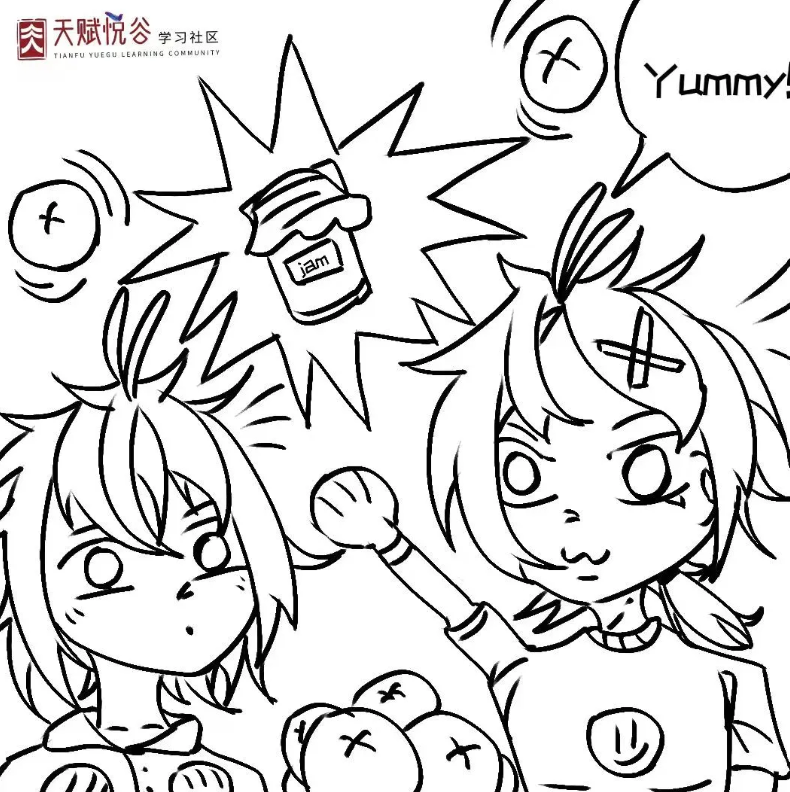
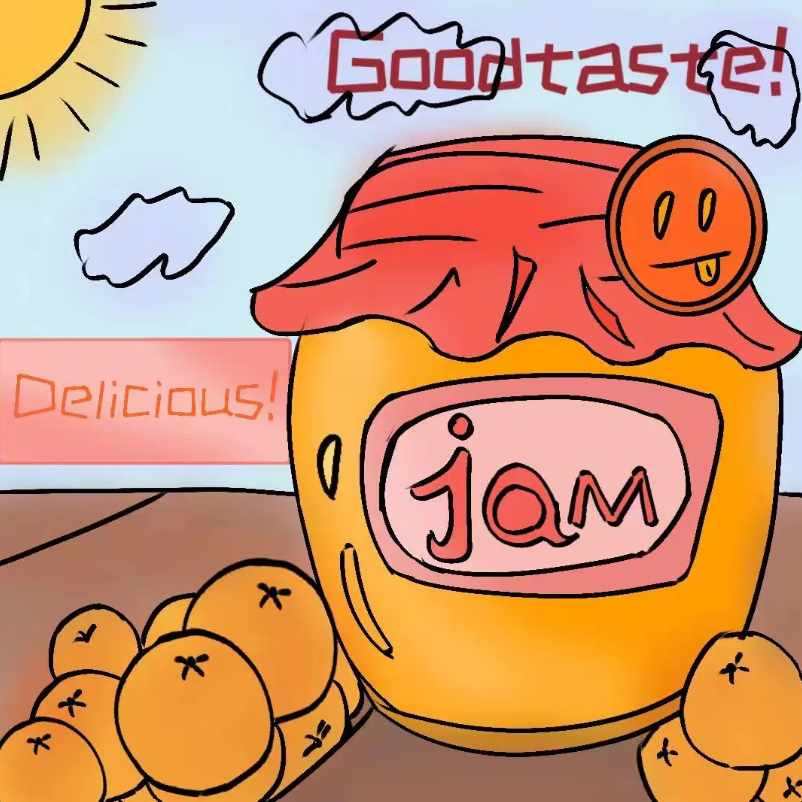
YY is an exceptionally talented manga artist. During the
first camp, the Foodie Club invited her to design the packaging for the
community’s homemade kumquat jam. We discovered that YY has a remarkable gift
for capturing the beauty in daily life. Everyone was absolutely charmed by her
hand-drawn illustrations for the packaging.
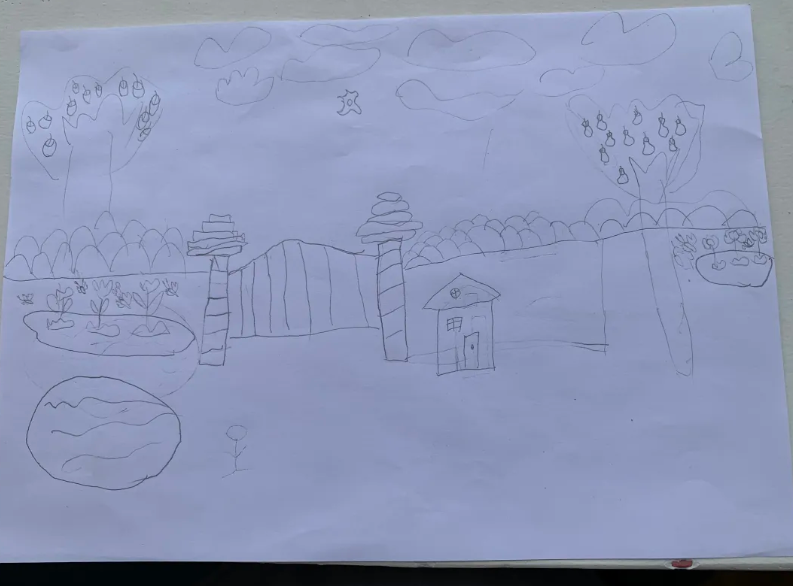
YY’s hand-drawn packaging illustrations YY’s hand-drawn packaging illustrations
During the second camp, the community invited YY to
represent the essence of our community through a series of illustrations.
Though the project is still a work in progress, she shared some of her initial
ideas with Shu Mei, a staff member. YY wanted to include the people of the
community but wasn’t quite sure how to approach it.
Shu Mei shared her own perspective: “What matters most
when drawing a person is the feel (the vibe or essence) that person
gives you.”
Inspired by this, YY began to observe the community members
meticulously, paying close attention to the unique feeling each person
radiated. She started striving to capture these “feels” in her
drawings and began sharing her observations and emotional insights with Shu
Mei.
When YY first arrived, she expressed discomfort around
children much younger than herself, even a sense of fear. I suspected it was
because young children can be so boisterous, and YY is sensitive to intense or
chaotic scenes.
However, during the camp, within our self-directed
environment, we witnessed YY showing immense love and extraordinary courage in
caring for and protecting those very children. As mentioned before, her offer
to join them for McDonald’s was solely to provide an extra pair of hands for
their care, and her sudden hundred-meter sprint to catch up with a child
demonstrated her deep commitment. Seeing YY protect these children in such a
way inevitably reminds me of Holden, the protagonist of The Catcher in the
Rye, who is of a similar age.
For a child like YY—so brimming with love, infused with the
courage to live, and so gifted at discovering the beauty in everyday life—her
parents truly have nothing to worry about.
Through these stories of YY, we can see how a self-directed
environment fosters a space where adults and minors play and communicate
together (after all, who is to say that work isn’t a form of play?). In this
setting, the flow of life experience is unhindered. Each individual can sense
and embrace every facet of their existence. When the “sunlight and
rain” of experience are abundant and well-balanced, life naturally grows
in its healthiest, most authentic form.
In such a diverse, age-mixed, and self-directed community,
and through the medium of free play, every life is gaining a rich tapestry of
experiences—no matter the direction.
Even as a child, I held this educational philosophy—and we
must never underestimate a child’s perspective: truly capable parents and
teachers do not criticize; they simply encourage a child to develop their
strengths.
A child is in a constant state of learning and growth. As
long as they continue to evolve in the direction of their interests, their
so-called “shortcomings” will naturally vanish as they grow. For
instance, when a five- or six-year-old truly wants to accomplish something,
they find a profound inner stillness. A child who typically seems scattered
will become focused, and one who appears careless will become meticulous.
A child’s life is just starting; they must seize upon a specific direction first—this is an essential requirement for growth. Without this, a life cannot truly unfold.
Adults might feel a child is clutching one direction too
tightly, that they lack “balance.” But they are just a child! As an
adult, are you balanced? In a rich, self-directed environment with ample
time and space for free play, a child will inevitably have countless
opportunities to encounter other experiences. There is no need for an adult to
point out a child’s so-called “shortcomings.”
Those “shortcomings” are often just the needs of
the adult, not the child. Yet, because adults are “stronger,” they
feel entitled to inflict this form of violence upon minors—simply because they
can.
Self-directed education: Adults and minors walking the path together
How Do Adults Make Progress?
As discussed, in a self-directed education community,
learning and growth are never just for the children. A human life is finite,
and everyone has their own lifelong “subject” or calling to fulfill.
To be able to complete one’s own life’s task within that limited time is
already a profound stroke of fortune.
In a self-directed environment, educators are granted a rare
fortune: to witness, through the children, the innate wholeness that
resides in every life from the very beginning.
Playing alongside children is, in essence, a reunion with
one’s past self. Without being in education, it would be difficult to recall
the growth experiences of decades ago. Throughout our own journeys, we have all
had good and bad experiences, positive and negative encounters. To engage in
education—especially self-directed education—is to grant oneself the
opportunity to grow all over again.
Life is not linear. In the process of growth, we find
ourselves in a constant reunion with our past selves.
During the first and second terms of our self-directed
education camp, every member of our adult team experienced significant personal
growth. While I can only speak for myself today, my own journey has been one of
rediscovering the “innate wholeness” of life.
Personally, I have experienced profound growth—not only in
the acquisition of various interests and skills but, more importantly, in the
evolution of my very being.
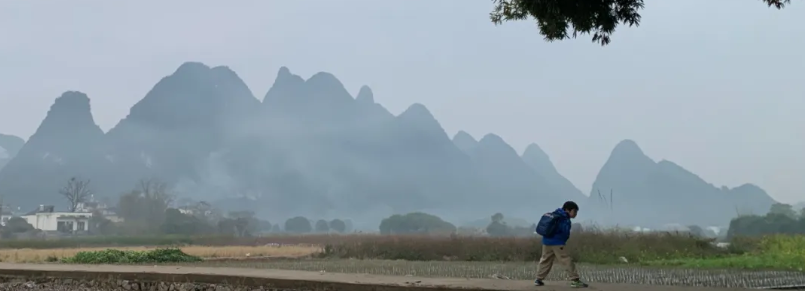
In terms of personal growth, I recall one afternoon when I
wanted to explore the surroundings by going for a run. I’ve never liked the
feeling of staying in one place for too long without forming a connection with
the environment.
Just as I stepped out of the school gates, two seven- or
eight-year-old children started following me, wanting to join in. Concerned
about their safety on the road with passing cars, I gave up my plan for a
long-distance run. Instead, I led them toward the trails heading up the
mountain.
Two children, one from the city and one from the mountains.
Although the city boy was a year older and took on the role of the big
brother—caring for the little girl every step of the way—it was the younger
girl, the child of the mountains, who was the true leader of this adventure.
Watching these two children explore the wonders of animals,
plants, and all that nature offers, I am reminded of my own childhood
adventures climbing mountains with my brothers. Back in middle school, I even
wrote a lengthy essay recalling the various discoveries and beauties we
encountered during our hike.
As dusk fell and darkness began to gather on our return
journey, the two children moved forward—a mix of trepidation and
excitement—paving their own way through the fading light. Along the path, the
older brother began telling the younger girl a ghost story—one that wasn’t
frightening at all, but rather a comforting echo in the quiet woods.
This suddenly brought back the memory of hiking mountain
trails in the dark with my brothers. Walking and talking in the silence of the
wilderness—the stillness of the night intertwined with the warmth of human caring,
the thrill of adventure balanced by a steadfast confidence. Everything was so
vivid.
This is perhaps the ultimate meaning of free play: it offers a fundamental, grounding experience of life itself. In these moments, there is no “self” standing apart from the world, yet every life manifests with absolute clarity. Isn’t this precisely the “original innocence” that we have lost in modern education?
If it weren’t for playing freely with these children, it would be difficult for me to recall my own growth process. But being with them every day allows me to trace my development step by step, realizing: So this is how my life was formed!
Exploring the wilderness with them, I witness the growth
that nature’s beauty and abundance bring to the children, while simultaneously
confirming within myself everything that playing in nature as a boy gave me.
These are growths from the depths of being. As a manager with extensive
professional experience, I can clearly see the profound connection between
these childhood experiences and workplace skills—yet I know that most adults
remain blind to this.
There is at least one certainty: children who have played freely in nature possess a deep-seated belief that everything in this world is intimately connected and in a state of flow. To them, the world is yours to navigate.
Much of my confidence in design and creation throughout my professional career stems from this very foundation. I often wonder why others are so fragmented and rigid in their creative processes. Children with these experiences become active agents in their own lives; they possess the courage to face the unknown, firmly believing in their power to create their own destiny.
Furthermore, in the various activities with the children
I’ll mention later, I have an underlying goal: to experience what my oldest
brother experienced when he used to lead us. Although my younger brother was
always part of our circle, he and I are only two years apart—practically peers.
My oldest brother, however, was five or six years older, and that age gap
created a remarkably rich experience for all of us, him included.
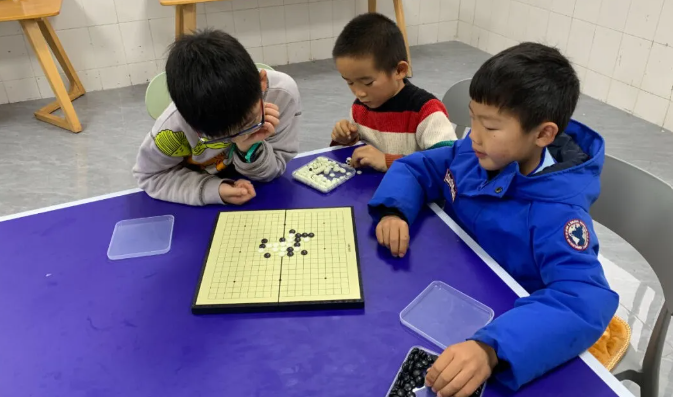
He was the one who taught us all our board and card games,
constantly inventing different ways to play. I remember him giving us a 9 or
12-stone handicap in Go, watching us joyfully securing our tiny little
territories, while he masterfully occupied the vast majority of the board.
This two-week immersion camp has fostered so much inner growth that, due to space constraints, I can only share a small fraction here. My primary goal is to help everyone sense how life naturally flourishes on its own within a Self-Directed Education environment. Next, I will discuss the learning and growth that occurs through various interests and hobbies; these are, truly, among the most beautiful parts of a life fully lived.
As someone who naturally loves sports, my busy schedule used
to limit me to just one focus: soccer. However, after a leg injury, I barely
exercised for over a decade. Last year, a bout of frozen shoulder left swimming
as my only option. In the city, finding the right people and facilities for
sports is never easy. But the sports facilities at Yangshuo Yuegu are
incredibly convenient—far more so than any other Self-Directed Education
community I’ve known. Having such a sprawling playground right there is truly a
unique and gifted advantage.
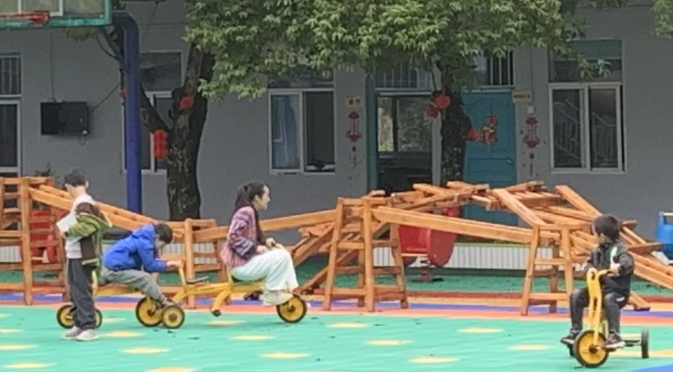
At a Self-Directed Education community like Yangshuo Yuegu,
unlike conventional schools, adults have ample time to play freely—one could
even say that free play is a fundamental part of the “job.” In an era
where children generally lack outdoor activity, it is profoundly meaningful for
adults to lead by example. By engaging in their own play, they naturally
inspire children to step out of their rooms, leave their computers or phones
behind, and re-engage with the physical world.
Consequently, whenever I started juggling a soccer ball on
the community field, students and staff would naturally gravitate toward the
action. Even YY, who rarely ventured into sports, took the initiative to come
over and try juggling. We’d all juggle and pass together, playing games like
“monkey in the middle” (keep-away) or jumping into matches. After
just a few days, I realized my old leg injury had completely healed. I used to
lack power in my passes, but now I can pull off long-range shots again! I feel
like my days of galloping across the football pitch have finally returned.
I had barely touched a basketball since elementary school,
even though I played constantly back then. The community provided the perfect
time and space for me to give it another try. Because my frozen shoulder hadn’t
fully healed, I struggled to find my strength at first; I had barely used that
arm for a year. Yet, perhaps thanks to the lighthearted spirit of free play, I
quickly regained my touch. Before I knew it, the frozen shoulder had completely
cleared up!
Beyond that, I also played ping-pong and badminton in the
community. I even improvised a unique “rustic golf” game exclusive to
Yangshuo Yuegu, combining the mechanics of golf with the way we used to play
glass marbles as kids.
Beyond playing on my own, I also played alongside the
children. There was no deliberate instruction; instead, we focused on letting
the children play and experience everything freely. Most of the time, the staff
simply modeled the activities through their own engagement, yet several of the
children’s skills improved by leaps and bounds during the camp! Based on my
past experience, if there were more opportunities for soccer matches, the
students could fully grasp how the game should be played simply through the
experience of playing the match itself.
For me personally, practicing these sports is actually a
form of Tai Chi practice. Tai Chi, after all, is meant to be applied to every
aspect of life.
One evening after dinner, I was suddenly
“ambushed” by two children. Both of them love martial arts and
decided to use me as their sparring partner. Having loved “fighting”
with other kids when I was young, I felt a spark of interest to relive that
experience. Moreover, since Tai Chi requires practical application, I figured I
could use its principles to spar with them without causing any harm.
I essentially used only one hand, mostly parrying and
avoiding direct confrontation. My focus was on staying light on my
feet—retreating and dodging quickly—while waiting for the right moment to catch
their strikes in stride. I made a conscious effort to never let myself get
trapped between them. Later, I even took off my sweatshirt to use as a soft
restraint when the opportunity arose, which felt like a gentler way to manage
the “battle.”
Eventually, the kids escalated the “tournament” by
bringing out mop handles. I hesitated for a moment, but then grabbed a mop of
my own to “accept the challenge.” Even then, I avoided direct
clashing of the sticks. I used feints and dodges to create openings, lightly
tapping them on the back with the mop head whenever I saw a chance.
Children who loves martial arts
Looking back, as an educator in the community, this might
have been pushing the boundaries a bit, and I wouldn’t necessarily recommend
this style of play to everyone. However, I see it as being similar to how Lu Anke
(Eckart Loewe) used to frolic with the children in the rural mountains of
Guangxi—letting them grab and strike him without reservation. In a sense, this
was taking the mixed-age educational approach to its absolute extreme.
In fact, back when I was teaching myself soccer, I frequently played with people of all skill levels—from absolute beginners to those who were incredibly fast, technically gifted, or both. Competing against novices or masters with diverse playing styles allows you to sharpen your skills in different ways; it is all part of developing a living sensing of the sport.
During the second session of the camp, I also re-experienced
calligraphy and painting. For me, these were two hobbies that had essentially
been ruined by school. We had calligraphy in the first and second grades, and
art classes were a constant throughout my schooling. I was actually quite
interested in both, but calligraphy class was taught through mindless
imitation—the teacher never encouraged us to experiment or feel the strokes;
they only focused on grading us. Art class was even worse, forcing us to draw
perspective diagrams from textbooks rather than observing real objects to train
our eyes, our brush control, or our capacity for abstract expression.
As a professional programmer and architect, I have spent
years focusing on the construction of beauty and life. Through visiting museums
and galleries, I have developed a strong appreciation for aesthetics. However,
beyond programming (including graphic design) and photography, I’ve rarely had
the time to practice creating beauty in other fields. I have been searching for
the time and space to make these attempts for years. In a Self-Directed
Education environment, adults are fully empowered to pursue their own
interests—because your own pursuit and practice are, in themselves, the best
way for children to learn.
Re-experiencing calligraphy in the community allowed me to
finally accumulate my own significant experiences. Having self-taught so
many sports and skills over the years, I now possess a deep confidence and a
wealth of experience in self-directed learning. I’m no longer like that child
who could be intimidated by teachers or stuck in mindless imitation. Instead,
by drawing on my own firsthand experiences, I quickly developed a method to
rapidly improve. For instance, I initially focused solely on the mechanics of
the brush—the starting, moving, and pausing of each stroke—without worrying
much about the character’s structure. Only after mastering the “feel”
of the brushwork did I shift my focus to the structure. In essence, the way you
control the brush’s movement is identical to how you handle a paintbrush, while
the structure of a character is no different from the composition of a
painting.
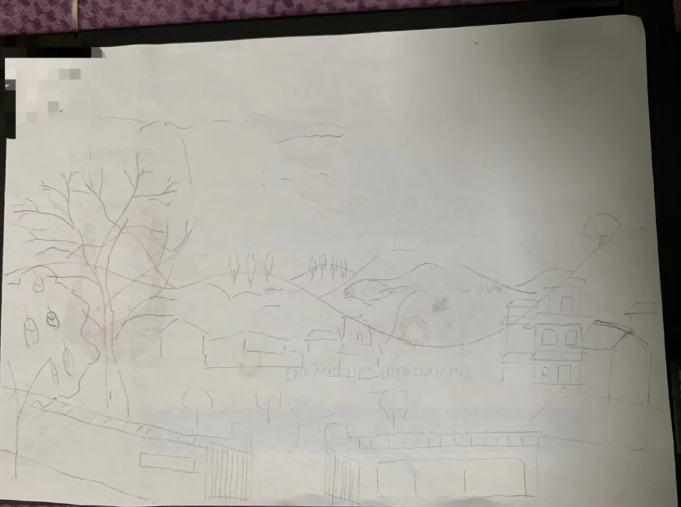
During the second session of the camp, I attempted to learn
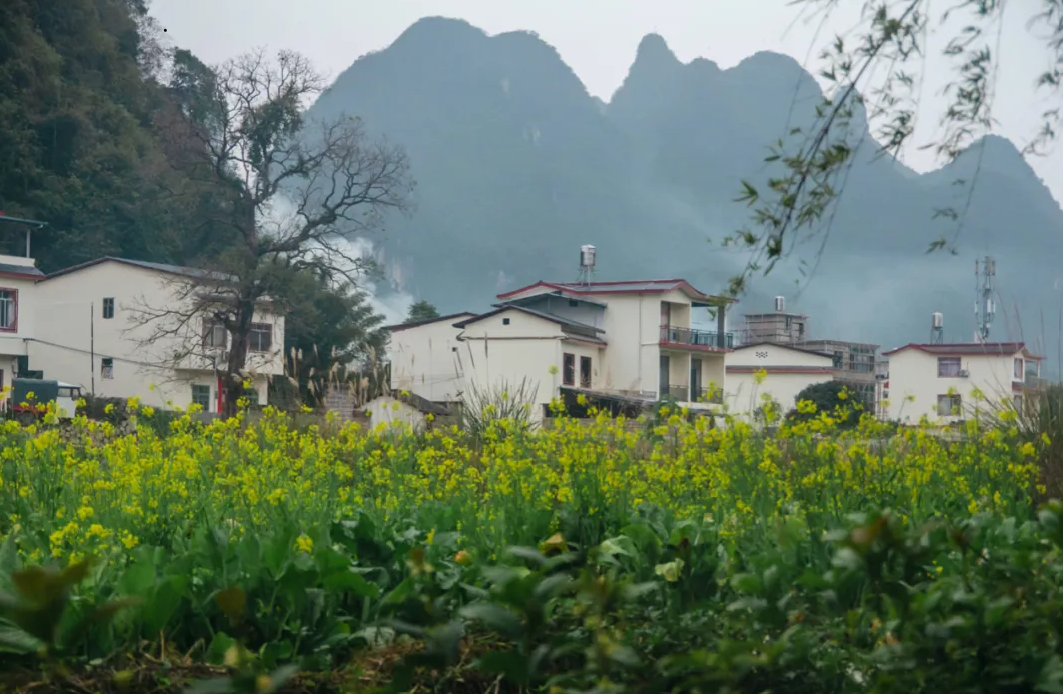
painting through a self-directed approach for the first time. It started when
the weather cleared up; the scenery outside the school gate was so beautiful
that I felt a sudden impulse to capture it. Before even touching the paper, I
had already formed a mental draft, identifying the primary lines and the major
Life Centers, as well as their spatial and overlapping relationships. I kept
the relative heights and placements of the houses largely faithful to the
actual scene, while making subtle adjustments. I also abstracted the distant
trees and other elements, expressing their forms and positions at an abstract
level. While the real scenery is stunning—otherwise, it wouldn’t be so
moving—the goal of painting is to extract those elements of beauty that touch
you and express them through abstraction. It’s about simplifying and adjusting
based on one’s imagination, yet still ensuring the place is instantly
recognizable, because the inherent beauty of the reality is what gives the work
its soul.
First attempt at self-directed learning in painting
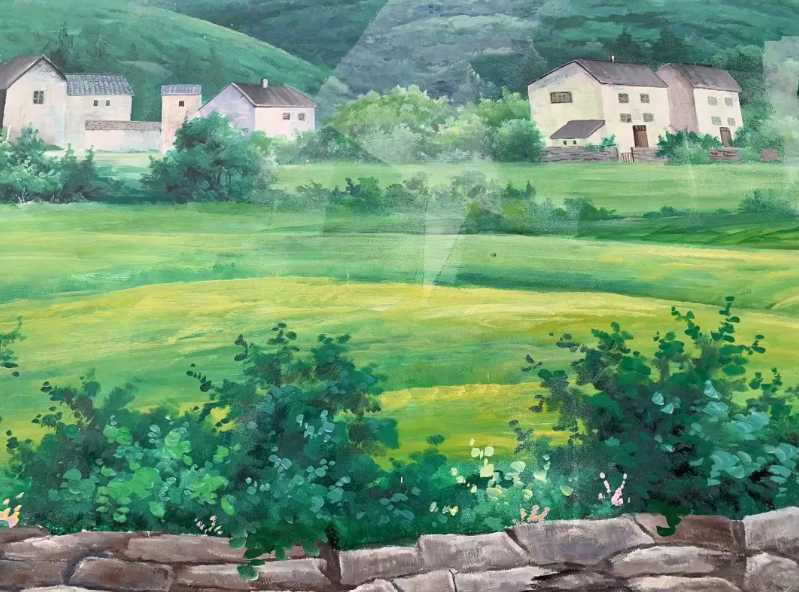
I had originally intended to add color, but after a brief
attempt, I realized I hadn’t quite grasped the technique yet. The next day,
while exploring a village along the Yulong River, I happened upon some oil
paintings on the walls of the houses. In that instant, I caught the
“feel” for how to apply color.
The oil paintings on the village house walls along the Yulong River
Therefore, the key to learning anything is to take action
and try it yourself. Only through trial and error can you accumulate your own significant
experiences and identify where your focus truly needs to be. Then, by
observing others’ work or by reading books, you will be able to find exactly
what you need.
Adults re-exploring their past interests is, in much the same way, an encounter between one’s positive and negative experiences. The true diversity of life can only be encountered through play.
Therefore, in a self-directed education community, the most
important element is free play—playing to one’s heart’s content. Growth and
learning are natural processes. The richer the play, the richer the learning
becomes.
Even though it was only my first attempt at learning to
paint through self-directed methods, I had the courage to share my
“work” in the student group. Several children were very
interested—they even asked me to take them to the same spot so they could draw
too! And the way they draw has, in turn, given me so much inspiration.
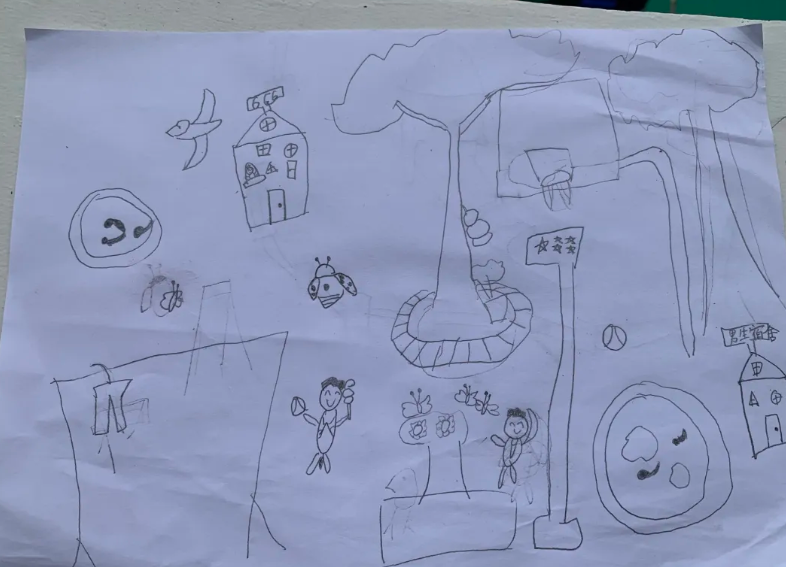
Student Artworks Student Artworks
In fact, people naturally possess diverse interests and hobbies; pursuing them doesn’t need to be utilitarian. One should simply enjoy them as one enjoys the sunshine and the rain. We no longer live in an era of material scarcity, and human production is no longer just the mechanized output of a frantic manufacturing age. Today, social progress depends far more on the creative capacity of individuals and teams. This creative capacity stems from life experiences across multiple domains. These Life Centers are flowing everywhere, all within one world; in free play, they will always find one another. Only where free play is confined does the flow of these Life Centers stagnate, making the growth of life a difficult struggle.
As individuals grow, they become powerful. However, as mentioned in a film review by ZY after a community screening, this power can also bring a shadow side—unless that power is used to meet the needs of others or to support the community, society, and the world. Perhaps we can say that what is powerful is not the ego, but the love the world bestows upon you. You must return that love to the world; you are the world! This is the true meaning of growth, or what we understand as “progress.” Such growth does not isolate us from the world; instead, it ensures we remain constantly in touch with the truth of existence. At times, we need to build abstract models based on our significant experiences in play to help us better understand our surroundings. Yet, these models are our own creations rather than the standardized knowledge found in modern education. They arise with our needs and dissolve when those needs are met. We remain one with the truth of the world; all lives are very clear, yet there is no separate “I” splitting out from it.
During these two weeks of the second camp session, many
brilliant and moving life stories unfolded within the community. This article
tells only a few of them from a single perspective. I hope that in the future,
we will have the time to share more of these life stories with everyone from
diverse viewpoints.
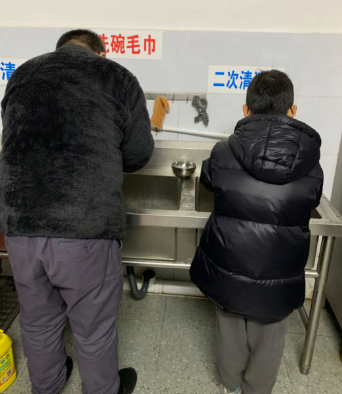
Father and son
03 / Life, only when self-directed
All of the above are the inherent capacities and natural
states of every living being. As long as they are not damaged, we can see these
capacities and states in every child. The work of a self-directed educator is
to constantly attend to and protect these life capacities, to continually
reflect on whether one’s own actions might harm them, and to strive to
cultivate the soil—or rather, the play-ground—where these life
capacities can flourish fully, allowing life to always manifest its original
state.
Every life experience, even the painful ones, is a good experience; they all help us grow. (Of course, experiences like drug use are irreversible and numb the brain, so they do not count as good or valuable experiences.) In a self-directed education community, we are able to witness the immense courage children show in facing life. We, too, should possess such courage to embrace every experience life offers.
Self-directed educators do not care what a learner’s current interest is; all interests are good interests. Every interest deserves attention, as each one helps the learner gain more life experiences. The role of a self-directed educator is simply to help learners play better within their current interests to gain even richer experiences. Growth in any direction will inevitably lead to encounters with experiences from the opposite direction—and these are all precious opportunities for the growth of life. Therefore, as self-directed educators, there is absolutely no need to impose an adult’s will or the will of so-called authorities upon other learners. Just help every individual do what they truly want to do!
Yes, we pursue progress—but the way we pursue that progress is through the self-directedness of life!
Epilogue:
During the writing process, for reasons I cannot fully explain, a memory from years ago resurfaced. In the aftermath of the September 11 attacks, at a cross-cultural gathering, I shared these words:
“I feel your profound sorrow. I joined your vigils, standing with you in silent prayer. In this pain, everyone has become so solemn, so grave. But what I want to say is this: if you truly wish to be serious about your values, you should play again, just as you did before. Do not allow the terrorists to change the fundamental essence of who you are.”
When I first came to the United States as a graduate student in 2000, I attended a Biomedical Engineering seminar during my very first week. There, I witnessed an American colleague presenting his work with a sense of free, playful enthusiasm and a profound love for his craft unlike anyone I had ever seen. Seeing that pure passion was the catalyst; it sent me on a quest to find the one calling I could devote my entire life to. That was the moment I chose education.
To watch the videos, please refer to the Original Chinese Version.