Original Chinese Version
Note: This is a lengthy piece; however, anything less than
an exhaustive article would fail to do justice to Christopher Alexander, a true
titan of thought. It serves as a relatively comprehensive exploration of the
“Life Framework” theory—rooted in the concept of “life
center”, a point of intensity that gives a system its vitality and
wholeness and a building block of a “living structure”—and its
significance for self-directed education and the future of learning.
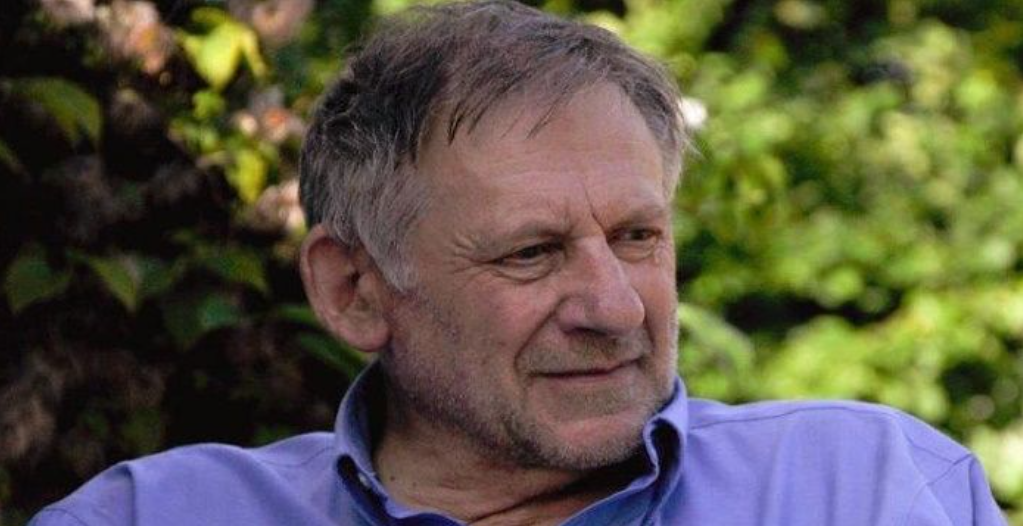
Christopher Alexander (1936-2022)
Christopher Alexander left us last month. Following John
Taylor Gatto in 2018 and Daniel Greenberg in 2021, yet another titan of thought
has departed. This brings me a profound sense of sadness. Some endeavors
require the collective effort of many generations; as the previous generation
passes on, can our generation take up the torch from their hands and continue
to light the path ahead?
School or Factory?
In 2004, I attended a three-hour lecture by John Taylor Gatto in our college town. Gatto’s meticulous, layer-by-layer analysis of the history of modern education spared us from spending countless hours tracing the intricacies of that history on our own. At a time when I felt utterly disillusioned with internet-based education research in both academia and industry, his insights made me feel as though I had finally found an ally. His passionate recommendation of the Sudbury Valley School revealed to me that the school of my dreams had already existed for a long time.
Sudbury Valley School
Daniel Greenberg, the founder of Sudbury Valley School,
through the Sudbury Model he practiced and articulated, has proven the
feasibility and superiority of Self-Directed Education. He demonstrated that
Self-Directed Education is, indeed, suitable for everyone.
The work remaining for us is to figure out how to scale
Self-Directed Education to society at large, rather than leaving it as a rare
opportunity available only to a fortunate few. In addition to continuing to
build more Sudbury Valley schools or similar Self-Directed Education
communities, we must also work on two other levels.
First, we need to propose a theoretical framework for a new educational paradigm—a new theory of education that can articulate the rich practices and methodologies of SDE communities through a simple framework. This will allow us to engage in a meaningful dialogue with traditional modern educational theories and, furthermore, truly establish education as the foundation of all knowledge.
Second, we must achieve a true digital representation of knowledge, properly digitizing the learning process to finally unlock the internet’s full potential for education.
In both of these areas, I have benefited immensely from the
ideas of the architect Christopher Alexander (CA). Rather than dwelling in the
sadness of losing one of history’s greatest thinkers, it is better to continue
the work of sharing and exchanging these ideas.
In his books and lectures, Christopher Alexander repeatedly pointed out that the process of modernization has made us mechanical, distancing us from the experience of life and giving rise to various problems in modern society. He proposed the concept of “life center” (more precisely, CA talks about Center and Degree of Life), suggesting that our recognition of these centers forms the basis of our appreciation for beauty—both in the natural world and in human creations. He explored how we can build beautiful, living architecture through our perception of these life centers.
I have extended the concept of the “life center” to all domains of human experience, including our understanding of human knowledge, because all experiences are experiences of life. I believe Christopher Alexander would have agreed with this approach—in fact, I believe it was his original intent.
Therefore, based on the concept of “life” or “life centers,”
we have constructed an understanding of a new educational paradigm and a new
theoretical framework for education.
Traditional education is a linear, step-by-step form of “learning.” However, true learning—much like life itself—should be interactive and iterative. To transform linear education into an interactive process, we need centers that facilitate interaction. “Life centers” are precisely these centers.
So, what does this new educational paradigm encompass?
First, playing/learning/creating, a trinity of life activities that allow learners to gain significant experiences from rich life activities.
Second, ubiquitous and equal life conversation based on these significant experiences.
Third, creating our own living knowledge based on these significant experiences. Knowledge is alive, organic, and must be centered around significant experiences.
Looking at the current state of Self-Directed Education globally, the first two points—life activities and life conservation—are performing well; they are relatively mature and have even achieved a certain degree of scale. However, there is a significant void regarding the third point: “living knowledge.” This includes even the popular Project-Based Learning (PBL) found in many innovative education models. The focus remains largely on dismantling the old system; because traditional schooling is seen as the root of the problem with “knowledge learning,” many innovative educators have developed a subconscious tendency to reject “knowledge” altogether.
In reality, if we recognize that knowledge is living—an
organic structure rooted in significant experiences—then this living knowledge
becomes completely integrated with SDE practices. It is precisely what we want
learners to strive toward through Self-Directed Education. The lack of this
component in current innovative education creates a barrier to meaningful
dialogue with traditional paradigms. Critics of innovation argue that these
models produce no visible outcomes, unlike the grades, degrees, and
certificates of subject-based testing. This makes it difficult for parents to
fully embrace Self-Directed Education.
How to turn the living knowledge that is in our brain into something that is visible to everyone? The conventional paper based knowledge format isn’t sufficient. This is precisely where we need software. By making the living knowledge visible, software makes the self-directed learning visible. Only software that correctly digitizes knowledge can truly harness the potential of the internet and scale Self-Directed Education to society at large.
Life activity, life conversation, and living knowledge constitute the three pillars of this new educational paradigm as I understand it. Or, more simply: the PlayGround, Conversation, and Knowledge. In the following articles of this series, I will explain each of these three elements and discuss how staying close to the nature of Life helps us better design and build local Self-Directed Education environments from a practical implementation perspective.