Original Chinese VersionAbstract: To commemorate Christopher Alexander, one must mention the “New Science” he strived to pioneer. The science of the future should be one where all disciplines merge and flow together. Subjectivity and objectivity achieve unity at the “Life Center”; art and technology, the humanities and the sciences, become integrated and interconnected within the “Living Space.” Consequently, our education—from theory to practice—must inevitably be reconstructed upon the foundation of life.
Finally, as a tribute to Christopher Alexander, I must mention that life centers were proposed as a spatial concept. Alexander regarded the perception of space as the very foundation of human intelligence and wisdom.
As mentioned earlier, the process of modernization has mechanized humanity and alienated us from life. One consequence is that the humanities have blindly copied the research methods of the natural sciences, emphasizing the complete exclusion of human subjectivity. However, Christopher Alexander pointed out that the subjective can be objective, and what we call objective is also subjective. He consistently strove to establish a new science that unifies the subjective and the objective.
Science is constantly evolving, and the science of the
future will be one that merges and integrates all disciplines. Our subjective
world is also replicable and falsifiable, and thus, it is objective.
Subjectivity and objectivity achieve unity within the life center; art and
technology, humanities and science, converge and connect within the life space.
Consequently, our education—from theory to practice—must inevitably be
reconstructed on the foundation of life.
One of the most significant consequences of the dogmatic
adherence to natural science in education is the disproportionate value placed
on linear logic and mathematical reasoning. This has led us to overlook the
fact that spatial perception is the very foundation of human thought. Many of
the “logic puzzles” we struggle with can actually be resolved
instantaneously through spatial intuition, bypassing the need for cumbersome,
step-by-step reasoning.
We see a vast number of extracurricular programs claiming to
cultivate a child’s linear logical thinking, and even programming education
uses the development of linear logic as a primary marketing slogan. There is a
widespread belief that children who excel in STEM subjects do so because of
their superior linear logical reasoning. These are profound misunderstandings;
they are symptoms of how humanity has become increasingly mechanized through
the process of modernization.
By the same token, many educators believe that while traditional education is rigid and stagnant, it is easy to implement because everyone knows exactly what to do. This is only because we have become alienated from the feeling of life and have grown accustomed to an assembly-line mindset. Therefore, self-directed educators must deliberately reconnect with life and grasp the significant life experiences within their own journeys. I often say that a true educator is, by definition, someone focused on the growth of life. In reality, I have found that those who are truly passionate about education are deeply attentive to this organic growth. If self-directed educators maintain this intimacy with life, they will naturally be able to perceive and design their own self-directed learning environments.
If we study the process of biological evolution, we find
that the evolution of life is primarily an evolution of spatial perception. In
particular, it was the evolution of the eye that triggered the Cambrian
Explosion—a massive radiation of species.
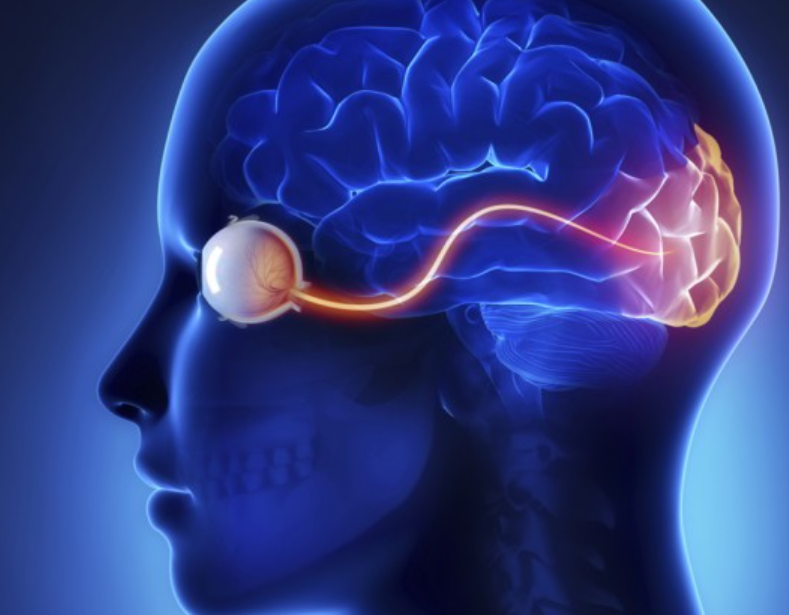
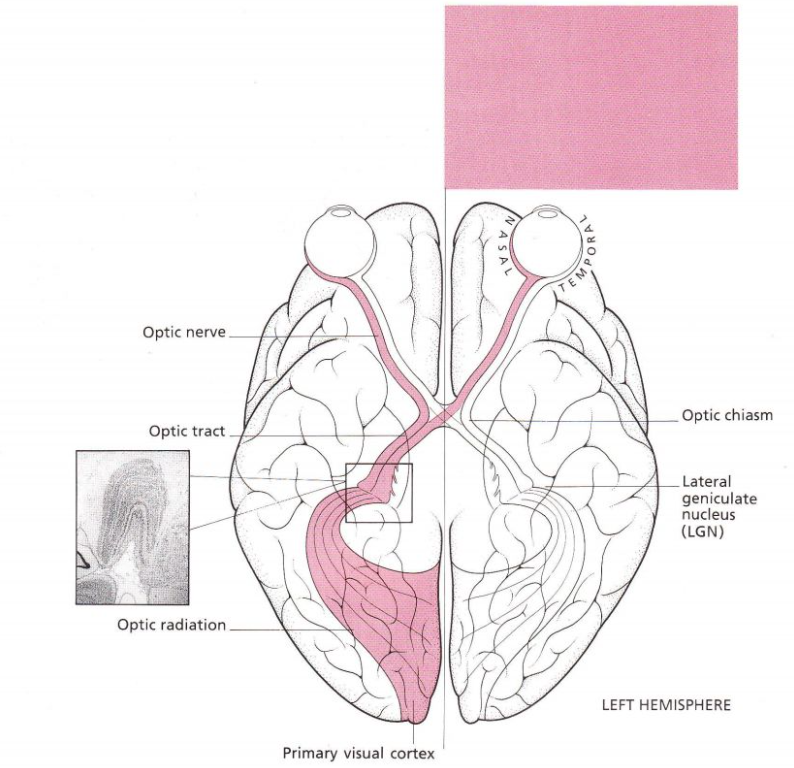
In fact, we can “see” even without eyes. What matters is not the eye itself, but the act of “seeing” performed by the brain regions connected to the optic nerve. Brain science has discovered that other senses—such as smell, touch, and hearing—all eventually converge upon these neural regions located behind the optic nerve; this is the visual cortex, and it corresponds to the perception of space. When you smell or hear something, your brain also generates images. Therefore, what we call “seeing” is simply the brain identifying a “life center.” The object being “seen” does not need to emit light; it can even be an entirely abstract entity.
The visual cortex is located in the back of the headVisual Cortex
I suspect that human “seeing,” or our capacity for spatial perception, has been enhanced by the development of language. Language enables the human neocortex to store significant experiences of living space and the abstract models built on top of them. This is why humans can “see” concepts such as numbers, length, weight, speed, society, history, and beauty.
In fact, animals also possess the ability to identify life
centers and abstract models; otherwise, they would be unable to recognize their
kin, their mates, or their natural predators. Lions and cheetahs, for instance,
must have an inherent perception of speed. As they prepare to leap, they are
already gauging their own velocity relative to their prey, intuitively judging
whether that single movement will secure the catch.
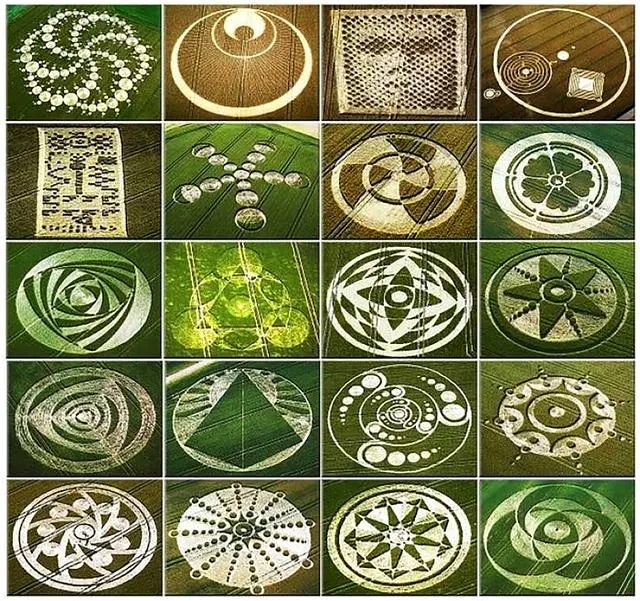
In the following animation, we can see that even fish—which
occupy a lower position on the evolutionary tree—possess an innate sense of
beauty. They are capable of recognizing and constructing intricate,
aesthetically pleasing geometric patterns.
The exquisite patterns constructed by fish on the seabed
The various patterns constructed by fish
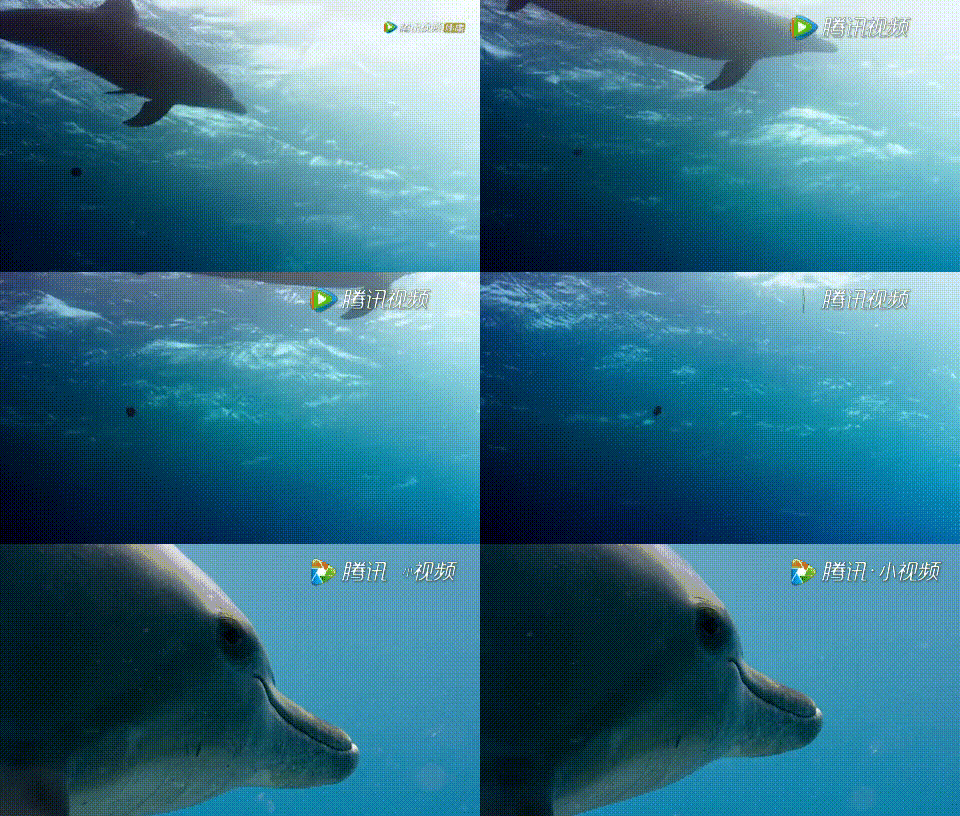
Similarly, dolphins also experience the sense of play and
fun.
Dolphin tossing fragments of coral
Dolphin appreciating the way fragments of coral descend
Thus, we can see the progressive development of spatial
intelligence. What distinguishes humans from other animals is our ability to
use language to form visual concepts and perform visual compositions. This
allows us to store significant experiences and abstract models, transforming
them into knowledge within the human neocortex. Because of these capabilities,
we can engage in complex thinking and continuously discover new insights.
Consequently, humanity has been able to transcend other species—not by relying
on biological evolution, but through learning, which enables us to elevate our
spatial cognitive abilities throughout a single lifetime.
Even after the invention of software and the digitalization
of our world, we have failed to correctly digitalize the knowledge stored
within the human neocortex. Today, the digital representation of knowledge
remains constrained by the traditional format of paper; it remains
document-centric. We have yet to realize that we can now directly digitalize
the significant experiences and abstract models held within our minds.
For Self-Directed Education to be promoted throughout society, it is essential that we re-evaluate our understanding of knowledge. We should not abandon knowledge; rather, we must embrace “living knowledge.” Only when knowledge is truly digitalized can we fully unleash the potential of the Internet, allowing Self-Directed Education to rapidly emerge as the mainstream of future learning.
Christopher Alexander dedicated his entire life to helping
humanity rediscover the space of life and reshaping a new science—one that
unifies the objective and the subjective to include the essence of life itself.
Therefore, although this series has already become quite extensive, I have
decided to conclude by discussing the topic of Living Space. At the same time,
I believe that a thinker as profound as Christopher Alexander cannot be
commemorated with a brief essay; it requires a long-form work. His masterpiece,
The Nature of Order, spans four volumes, each over a thousand pages
long. Only a long-form article is truly fit to honor his legacy.
You are gone, and I have lost yet another kindred spirit.